

Charlotte Bronte Books In Order
-
-
-
-
-
The Professor
[ October, 2025 ]


About Charlotte Bronte
Genres
Charlotte Bronte Bio
Charlotte Brontë was born in Thornton, Yorkshire, to Maria Branwell and Patrick Brontë, and her mother died when Charlotte was five. Her aunt, a devout Methodist, helped Patrick raise his children while he served as curate at Haworth, where the family settled in 1820.
In 1824, Charlotte and three of her sisters were sent to the Clergy Daughters’ School at Cowan Bridge in Lancashire, where her two older sisters, Maria and Elizabeth, died of tuberculosis. The family pulled Charlotte and Emily home, and Patrick took charge of their education himself. He gave the surviving children access to his well-stocked library, and that shaped their reading and imaginative lives a great deal.
When they were young, the children created a fictional world they named Angria, and their many stories, poems, and plays were early signs of a shared gift that eventually led Emily, Anne, and Charlotte to careers as novelists. Charlotte later returned to formal schooling at Roe Head, became a teacher there in 1835, and then tried her hand as a private governess. Neither role satisfied her ambitions or suited her temperament, and she eventually came home to Haworth.
The defining chapter of her life began in 1842, when Charlotte joined the Pensionnat Heger, a girls’ boarding school in Brussels, first as a student and later as a teacher, because she hoped to acquire the skills she’d need to open a school of her own. At the Pensionnat, she and Emily were taught by the charismatic Constantin Heger, whose wife owned the school. He saw their literary talents and gave them encouragement and guidance as they honed their writing.
Charlotte had to leave Brussels after she fell in love with Heger, a married man. The experience was searingly painful, and it changed her writing too: Brussels echoes throughout Shirley and Villette, and Heger casts a long shadow across her heroes and anti-heroes, most notably as Rochester in Jane Eyre and Paul Emanuel in Villette.
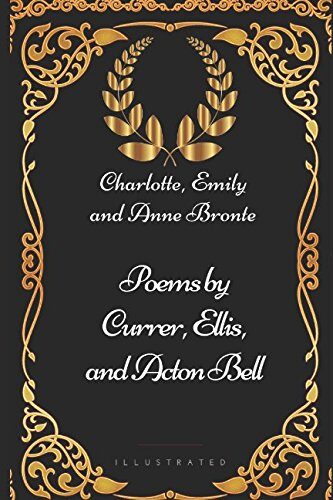
Back in Haworth, with her plans for a school abandoned, the three sisters pooled their writing and moved towards getting it published. In 1846, Charlotte accidentally found some poems that Emily had written and discovered that all three sisters had secretly been writing verse. They published their own book, Poems by Currer, Ellis and Acton Bell, and took pseudonyms because they believed women writers were judged harshly or dismissed without a fair reading. Charlotte was direct about why: she explained that they chose ambiguous names because they had “a vague impression that authoresses are liable to be looked on with prejudice.” Each sister kept her own initial and took the surname Bell, so Charlotte published as Currer Bell, Emily as Ellis Bell, and Anne as Acton Bell.
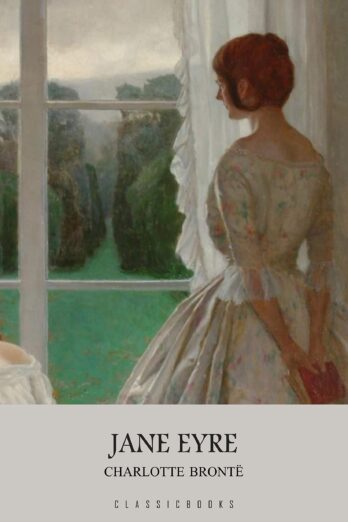
The poetry collection sold almost no copies, but publishers became interested in the sisters’ work. Jane Eyre was the first novel published by one of the Brontë sisters, appearing on 19 October 1847, a few weeks before Emily and Anne jointly published Wuthering Heights and Agnes Grey. Charlotte published it under the pseudonym Currer Bell, and it was an instant success, earning the praise of many reviewers, including William Makepeace Thackeray, to whom she dedicated her second edition. That second edition also contains a preface in which she firmly challenges and refutes some of the views of her critics.
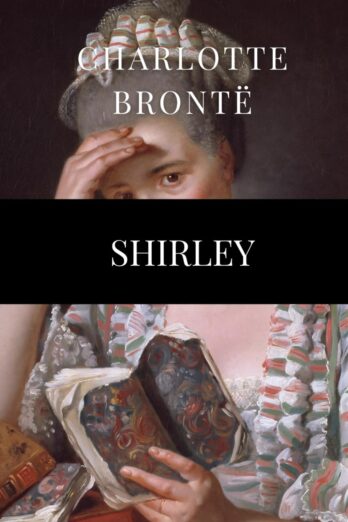
Her second published novel, Shirley (1849), comments on society and sets itself against the industrial unrest of early 19th-century England. It explores women’s independence, class struggle, and romance through the contrasting lives of its two heroines, the shy Caroline Helstone and the vivacious heiress Shirley Keeldar. Charlotte wrote Shirley during difficult days: within one year, a brother and two sisters had died of tuberculosis. That the book holds together as a novel at all, given what she was living through while she wrote it, says something about the discipline behind the warmth.
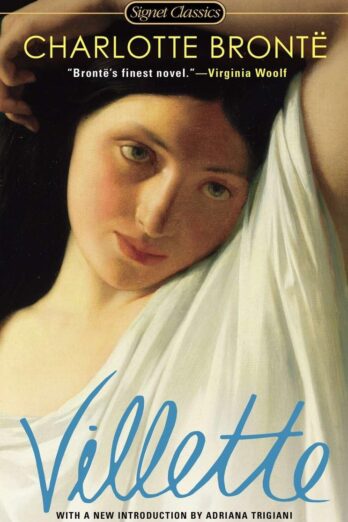
Villette (1853), her final novel published in her lifetime, is widely regarded as her most accomplished and deeply felt work. It follows Lucy Snowe, an English teacher at a girls’ school, as she navigates love, loneliness, and self-discovery in the fictional city of Villette. The novel draws heavily on Brontë’s own time teaching in Brussels, which lends an autobiographical ring to Lucy’s struggles as a foreigner in a strange land, and it explores the tension between Protestantism and Catholicism while offering a nuanced portrait of a woman’s interior life in Victorian society. Villette was also the first of her novels published under her real name, since her earlier books had appeared as Currer Bell.
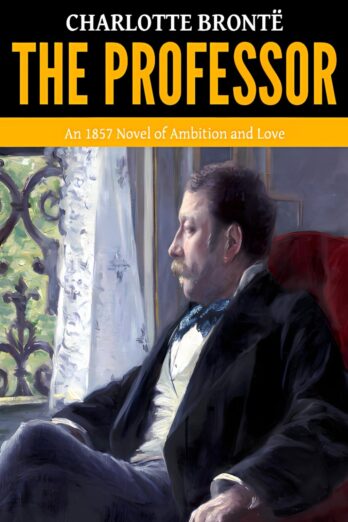
The first novel she ever wrote, The Professor, was published after her death in 1857. It covers similar Brussels ground to Villette, though with considerably less of the emotional force she’d learned to deploy by then.
Charlotte suffered one tragic loss after another and mourned her siblings as they died: Branwell and Emily both in 1848, and Anne in 1849. She married her father’s curate, Arthur Bell Nicholls, in 1854, aged 38, and died on 31 March 1855, possibly of hyperemesis gravidarum or a serious digestive illness.
The Brontë Parsonage Museum in Haworth, which opened as a museum in 1928, is a pilgrimage spot for fans of Charlotte, Emily, and Anne, who crafted some of the most celebrated novels in English literature within its walls. The museum holds the world’s largest collection of Brontë artefacts, and there are more items relating to Charlotte than to her sisters, because by the time she died in 1855 she was a famous author and her belongings were eagerly sought and carefully kept. The first literary tourists started to appear in Haworth around 1851, after Jane Eyre came out, because they hoped to take away a Brontë souvenir or an anecdote from one of those who’d known the family. That tide has never really gone out.
Charlotte Brontë Books
Charlotte Brontë’s four published novels, in the order they appeared:
| Year | Title | Notes |
| 1847 | Jane Eyre | Published as Currer Bell; Smith, Elder & Co., London |
| 1849 | Shirley | Published as Currer Bell |
| 1853 | Villette | First published under her real name |
| 1857 | The Professor | Posthumous publication |
She also co-authored Poems by Currer, Ellis and Acton Bell (1846) with her sisters Emily and Anne, and she wrote a substantial body of juvenilia centred on the fictional world of Angria, which she worked on from childhood onwards and which was collected and published in various forms after her death.