

Jane Austen Books In Order
-
-
-

-

-

-

-
Love and Friendship and Other Early Works (A Collection of Juvenile Writings)
[ November, 2017 ]3.4 -

-

-

-
-
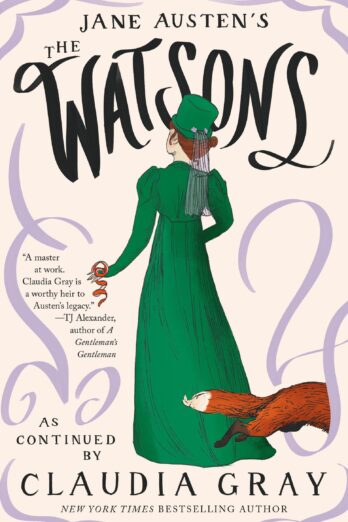
The Watsons
[ November, 2026 ]


About Jane Austen
Genres
Jane Austen Bio
Early Life and Family
Jane Austen was born at the Rectory in Steventon, a village in north-east Hampshire, on 16th December 1775. She was the seventh child and second daughter of the rector, the Revd George Austen, and his wife Cassandra (née Leigh).
Her father was a scholar who passed his love of learning on to his children.
Of her brothers, two were clergymen, one inherited rich estates in Kent and Hampshire from a distant cousin, and the two youngest became Admirals in the Royal Navy; her only sister, like Jane herself, never married.
Jane’s lively, affectionate family gave her a stimulating place to write. What she saw reached well beyond Steventon rectory, too, because she was tied by blood and friendship to a wide network of people. It was this world, the minor landed gentry and the country clergy, in the village, the neighbourhood and the country town, with the odd visit to Bath and to London, that she’d later draw on for the settings, characters and subject matter of her novels.
Of all her brothers, Jane was closest to Henry; he acted as her agent, and then, after she died, as her biographer.
The third son, Edward, was adopted by their father’s wealthy cousin, Thomas Knight, and in time he inherited the Knight estate in Chawton, where Jane would later finish most of her novels.
It was a family whose circumstances touched nearly every social rung she’d later write about.
The Austens were a loving, spirited family who read novels together from the local circulating library and put on home theatricals. It was for that family circle that Jane first wrote high-spirited satires, some of which turned into novels after she’d rewritten them carefully, many times over.
The Interrupted Years: Bath and Beyond
When the Rev. Austen retired, Jane and her father, mother and Cassandra left Steventon and moved to lodgings in Bath.
Steventon had been Jane’s home for her first twenty-five years, and being uprooted to a city unsettled her writing life quite a bit.
She probably kept working on First Impressions after the family moved to Bath in 1801, and she didn’t stop revising and rewriting it until after her father and a close friend both died in 1805. From that point she seems to have given up writing for almost five years.
While the Austens were based in Bath, they holidayed at seaside resorts in the West Country, among them Lyme Regis in Dorset, and that’s where Jane got the background for Persuasion.
Even the fallow years, it turned out, were doing something useful.
Chawton Cottage and the Published Novels
Eventually her brother Edward offered them the use of a cottage in Chawton village, and they moved there in 1809 with their friend Martha Lloyd.
Jane lived in this inspiring Hampshire cottage for the last eight years of her life. Here her genius flourished, and she wrote, revised and published all six of her globally beloved novels: Sense and Sensibility, Pride and Prejudice, Mansfield Park, Emma, Northanger Abbey and Persuasion.
Though she’d been writing since 1789, her first novel didn’t appear until 1811. Sense and Sensibility came out anonymously (“By a Lady”), and her brother Henry paid for it to be printed.
The books that followed came out under equally guarded attributions.
When her first book appeared, the only nod to Jane herself was the phrase “By A Lady.” The novels after it were tagged “By the Author of Sense and Sensibility” and so on, picking up titles as they went.
Pride and Prejudice came out on 28 January 1813 from Thomas Egerton, Military Library, Whitehall, London; Mansfield Park followed in May 1814, again with Egerton; and Emma appeared in December 1815 from John Murray in London.
Emma was dedicated to the Prince Regent after he gave her permission to do so, which meant she had little choice. She disliked the Prince and wasn’t thrilled to honour him with an effusive dedication.
Jane, who disapproved of the Prince’s extravagant lifestyle, didn’t want to follow the suggestion, but her friends talked her round: in short order, Emma was dedicated to him.
Northanger Abbey (a reworked version of a novel she’d written years earlier and shelved) and Persuasion (a newly finished work) came out together after Jane died in 1817, with a “Biographical Notice” written by her brother in which her identity as the author of the previous four books was revealed for the first time.
Style and Themes
Jane Austen’s distinctive style leans on a blend of parody, burlesque, irony, free indirect speech and a degree of realism.
She uses parody and burlesque for comic effect, and to pick apart how women were portrayed in 18th-century sentimental and Gothic novels. She presses her critique further by exposing social hypocrisy through irony; often she strikes an ironic tone through free indirect speech, where a character’s thoughts and words blur into the narrator’s voice.
Her plots are, at heart, about learning; her heroines come to see themselves and their conduct more clearly, and they grow into better, more moral people. While Jane steers clear of the formal moralising so common in early-19th-century literature, morality, bound up with manners, duty to society and religious seriousness, runs through the middle of her work.
Scholars have argued at length about how far the novels carry feminist themes; most agree the books show how some women take charge of their own worlds, while others are hemmed in, physically and spiritually. Nearly all of Jane’s work digs into the precarious economic spot that women of the late-18th and early-19th centuries found themselves in.
Jane Austen found drama and conflict not in grand historical events but in the small, personal dealings of her characters. The everyday world of ballrooms, family dinners and daily social duties becomes the stage where her characters are changed and grow.
The scope is narrow by design, and that discipline is part of what gives the novels their precision.
Later Work and Legacy
Jane fell ill in 1816, and by mid-April 1817 she was confined to bed.
In 1817 she started her final novel, The Brothers (later published as Sanditon), but she finished only the first twelve chapters.
On 24 May 1817 she left Chawton with Cassandra and moved into lodgings in Winchester, to be near Dr Lyford at the County Hospital. Her illness worsened fast, and she died early on 18 July 1817.
Six days later she was buried in Winchester Cathedral. When she died Jane was just 41 years old, and she’d been struggling with illness for over a year.
We don’t know for certain what killed her. The two main theories are that it was either Addison’s disease or Hodgkin’s lymphoma, though the symptoms she mentions in her letters don’t quite fit either one.
Jane is buried in Winchester Cathedral, but a small tablet was unveiled to her memory in Poets’ Corner, Westminster Abbey, on 17th December 1967, given by The Jane Austen Society. The two memorials together say something about how her reputation grew, locally at first, then nationally, then into every corner of the reading world. (Westminster Abbey, Jane Austen commemoration)
She earned a lifetime total of just £631 from writing, a figure that independent scholar John Avery Jones worked out from the Bank of England archives, and worth roughly £45,000 in 2019. Even so, her books have gone on to inspire a wide range of film and TV adaptations, they’ve been translated into over 60 languages (University of Southampton, Translating Jane Austen, 2017), and an estimated 78,000+ copies of her novels reportedly sold in the first 28 weeks of 2025 alone, putting her on track for her best sales since 2009. (House of Commons Library, Literary and cultural legacy of Jane Austen, CDP-2025-0240)
In 2017 the Bank of England issued a £10 banknote featuring a portrait of Jane Austen, based on a sketch her sister Cassandra drew in 1810. Bank of England Governor Mark Carney unveiled it at Winchester Cathedral on 18 July 2017, exactly 200 years to the day after she died. (Bank of England / BIS, Opening remarks at the £10 note launch, Mark Carney, 2017)
Pride and Prejudice alone has sold more than 20 million copies, and it’s never been out of print.
Jane Austen and her novels have shown up in popular culture in all sorts of forms for nearly two centuries. People have adapted and reinterpreted her work across literature, illustration, theatre, film, television, digital media and fan culture, which makes her one of the most continually reimagined authors in the English-speaking world.
Jane Austen Books in Order
The six completed novels, in order of publication:
# | Title | Published | Publisher |
1 | Sense and Sensibility | 30 October 1811 | Thomas Egerton, London |
2 | Pride and Prejudice | 28 January 1813 | Thomas Egerton, London |
3 | Mansfield Park | 9 May 1814 | Thomas Egerton, London |
4 | Emma | December 1815 | John Murray, London |
5 | Northanger Abbey | December 1817 (posthumous) | John Murray, London |
6 | Persuasion | December 1817 (posthumous) | John Murray, London |
Jane also left behind three volumes of juvenile writings in manuscript, the short epistolary novel Lady Susan, and the unfinished novel The Watsons, as well as the unfinished Sanditon, which she was writing in the final months of her life.
Each of the six novels works as a standalone, but if you read them in publication order you get a clear sense of how Jane developed, from the comparative directness of Sense and Sensibility through to the mature, more inward register of Persuasion.
Jane Austen FAQs
Who is Jane Austen?
She wrote six completed novels during the Regency era, all published anonymously, and she’s now regarded as one of the most significant writers in the history of English literature.
Her name is a byword for wit, social observation and insight into the lives of women in the early 19th century. People celebrate her as a social observer, a moralist, a comic genius and a popular, universal writer.
What books has Jane Austen written?
She also left unfinished works including Sandito and The Watsons, along with three volumes of juvenilia she wrote from the age of about eleven onwards.
What is Pride and Prejudice about?
The novel tracks how Elizabeth and Darcy grow close, and the two of them have to get past their central flaws of pride and prejudice before they can fall in love and marry.
Jane first drafted it as First Impressions in 1796-97, then reworked it heavily before it came out in 1813.
Did Jane Austen publish under her own name?
After she died, Cassandra and Henry arranged for Persuasion and Northanger Abbey to be published, and with those 1817 publications Henry wrote a eulogy naming Jane as the author of all of her novels.
It was the first time her name appeared publicly attached to the work.
What is Emma about, and why was it dedicated to the Prince Regent?
During one of her visits to London, the Prince Regent invited her, through his librarian James Stanier Clarke, to view his library at Carlton House; the librarian mentioned that the Regent admired her novels and that “if Miss Austen had any other novel forthcoming, she was quite at liberty to dedicate it to the Prince”.
Jane, who disapproved of the Prince’s extravagant lifestyle, didn’t want to follow the suggestion, but her friends talked her round: in short order, Emma was dedicated to him.
What genre did Jane Austen write in?
Her work draws on literary realism and romantic fiction, and by the 1980s scholars increasingly saw her as a perceptive critic of class, gender and social hierarchy in the late eighteenth and early nineteenth centuries, rather than simply a writer of polished domestic comedies.
Where is Jane Austen buried, and can you visit?
You can also explore exhibitions and events at Jane Austen’s House in Chawton, the most treasured site dedicated to her in the world, her home for the last eight years of her life, where she lived, wrote and published her novels, and which now houses a permanent exhibition celebrating her as a ground-breaking and ambitious writer.