

Mary Beard Books In Order
-
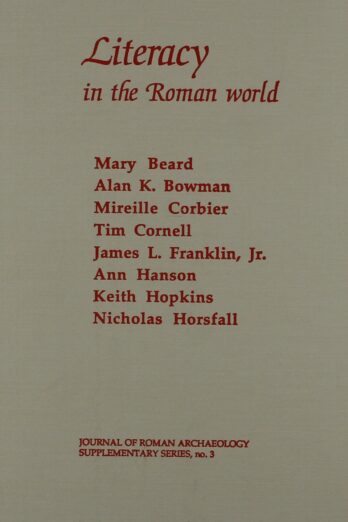
Literacy in the Roman World
[ January, 1991 ] -
-
-
-
-
-
-
-
-
-
-
-
-
-
-
-
-
-
-


About Mary Beard
Genres
Mary Beard Bio
Mary Beard was born on 1 January 1955 in Much Wenlock, Shropshire, and is an only child. Her mother was a headmistress and regular reader, while her father was an architect. She was educated at Shrewsbury High School, which was then a direct grant grammar school for girls. She participated in archaeological excavations during the summer for pocket money.
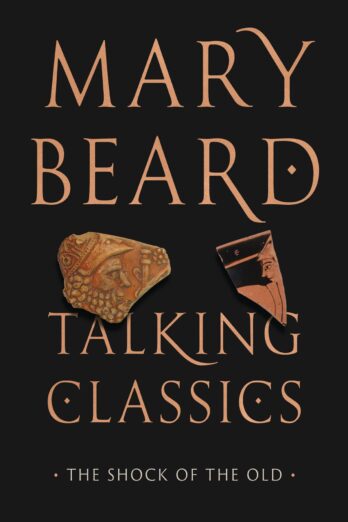
It was during a trip to the British Museum with her mother at the age of 5 when she became interested in the classics. She has a memory of sitting on her mother’s shoulders attempting to see a bread roll from Ancient Egypt when a curator noticed, and unlocked the case allowing her to view the roll. Her 2026 book, Talking Classics: The Shock of the Old was dedicated to this curator.
During her time at Cambridge, Beard developed feminist views that she described as ‘hugely important’ in her later life, views that were partly shaped by her experiences and the literature she encountered.
Mary Beard married classicist and art historian Robin Cormack in 1985. They have two children – Zoe is an anthropologist and historian at the Centre for African Studies at the University of Oxford, while their son Raphael is an author, editor and translator who specialises in Arabic Cultural History and Literature.
When planning her retirement, Mary Beard started a scholarship as a retirement present. Worth £80,000, the scholarship was put in place to support two disadvantaged students’ classical studies at Cambridge.
Early education and work of a renowned classicist
Mary Beard attended Shrewsbury High School, and during the summer holidays would join archaeological excavations, in part to earn some pocket money and in part due to interest. At 18, she sat the compulsory entrance exam and interview for Cambridge University, and won a place at single-sex Newnham College.
She graduated from Cambridge University with a Bachelor of Arts (BA) degree and later completed her Doctor of Philosophy (PhD) in 1982, with her thesis titled The State Religion in the Late Roman Republic: A Study Based on the Works of Cicero.
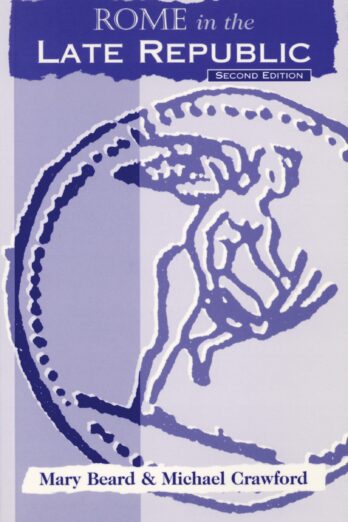
Between 1979 and 1983, Mary Beard was involved in teaching classics and poetry as a lecturer at King’s College London. She returned to Cambridge in 1984 as a Fellow of Newnham College, where she continued teaching and was, at the time, the only female lecturer in the classics faculty. Her book, Rome in the Late Republic, co-written with Michael Crawford, a Cambridge historian, was published in 1985.
It was after her second book was published that John Sturrock, the classics editor at The Times of Literary Supplement approached Beard for a review and introduced her into literary journalism. She then took over his role in 1992.
Mary Beard has spent over 40 years challenging traditional historical narratives and bridging the gap between academia and the general public. Over the years, she has seen significant academic achievement and movement:
In 2004 she became Professor of Classics at Cambridge through internal promotion.
In 2007-2008 she gave the Sigmund H. Danziger Jr. Memorial Lecture in Humanities at the University of Chicago.
In 2008-2009 she was elected Visiting Sather Professor of Classical Literature for 2008-2009 at the University of California.
In 2013, Mary Beard was named Professor of Ancient Literature at the Royal Academy of Arts.
In 2018 she was awarded an honorary degree from Oxford University
In 2019, she gave the sesquicentennial Public Lecture for the North American Society for Classical Studies
In 2019, she received an honorary degree from Yale University.
In 2020, she was appointed trustee of the British Museum
In 2025, she was announced as an ambassador for the National Trust.
Courting controversy
Beard is known for being upfront, and shortly after the September 11 attacks on the World Trade Centre in the US, she was one of several authors invited to contribute on the topic to the London Review on Books. Her opinion was that “many people, once “the shock had faded”, thought the United States had it coming, and that “world bullies, even if their heart is in the right place, will in the end pay the price”. These comments provoked a lot of controversy which she spoke about in a 2007 interview.
Historical figures and influences on Mary Beard
Mary Beard’s distinguished career as a renowned classicist has been shaped by a rich tapestry of historical figures and scholarly influences, most notably Jane Harrison and John North. Jane Harrison, a pioneering classicist and feminist, revolutionised the study of ancient Greek religion and culture. Her groundbreaking work challenged traditional interpretations and opened new avenues for understanding the ancient world, particularly the role of women and ritual in classical history. Beard has often cited Harrison’s fearless scholarship as a model for her own approach, especially in exploring the complexities of Roman religion and the cultural fabric of the Roman Empire.
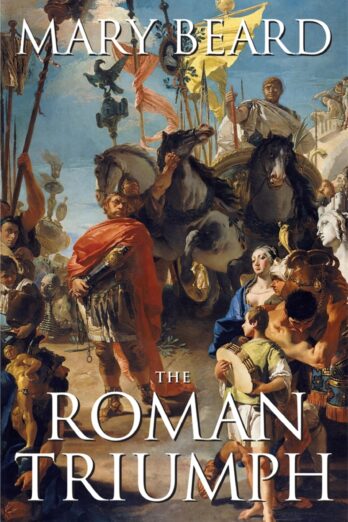
Another significant influence is John North, whose expertise in Roman religion and the vast polity of the Roman Empire has left a lasting mark on Beard’s research. North’s seminal book, “Roman Religion,” is frequently referenced by Beard for its nuanced analysis of how state religion and pagan priests shaped the daily life and political structures of ancient Rome. This scholarly foundation is evident in Beard’s own acclaimed works, such as “The Roman Triumph,” which won the Wolfson History Prize for its insightful exploration of the triumphal ceremonies that defined Roman public life and imperial power.
Beard’s engagement with ancient sources, including the writings of Julius Caesar, further enriches her historical competence. By drawing on Caesar’s commentaries and other untranslated Latin texts, she brings the voices of the past into contemporary discussions, making the ancient world accessible to modern readers. Her ability to bridge the gap between academic research and public understanding is also rooted in her formative years at Newnham College, Cambridge. There, Beard found a supportive environment that encouraged intellectual curiosity and fostered connections with leading scholars in classics and ancient history. This experience not only shaped her academic path but also inspired her to establish a retirement present scholarship, aimed at supporting disadvantaged students in classical studies at Cambridge, ensuring that the study of the ancient world remains open to all.
Beyond academia, Beard’s public voice has become a defining feature of her career. As a regular contributor to the Times Literary Supplement and through her popular blog, “A Don’s Life,” she has brought classical art, Roman Britain, and the life of a Roman into the public eye. Her writing demystifies classical studies, challenging the elitist ivory tower viewpoint and inviting a broader audience to engage with the culture and history of the Roman Empire. Despite facing aggressive insults and criticism—particularly as a prominent woman in a traditionally male-dominated field—Beard remains steadfast, using her platform to advocate for diversity, inclusion, and a more nuanced understanding of the ancient world.
Mary Beard’s influence extends far beyond the university lecture hall. Her historical competence, commitment to accessible education, and fearless public engagement have made her a leading figure in classical studies. By drawing on the legacies of scholars like Jane Harrison and John North, and by continually challenging the boundaries of the discipline, Beard ensures that the remains of ancient Rome and the lessons of history continue to resonate in the modern world. Through her books, media appearances, and ongoing scholarship, she inspires new generations to imagine the life, power, and culture of the ancient empire, proving that the past is not only alive but also profoundly relevant today.
Mary Beard on television
Not only has Mary Beard made her mark on the academic and literary world, but she has also contributed heavily to television, particularly with her documentaries. She has appeared on several television shows and been part of several documentaries.
Weird Thoughts – BBC
Pompeii: Life and Death in a Roman Town – BBC Two
Jamie’s Dream School – Channel 4
Meet the Romans with Mary Beard – BBC Two
Caligula with Mary Beard – BBC Two
Question Time – BBC
Pompeii: New Secrets Revealed with Mary Beard – BBC One
Mary Beard’s Ultimate Rome: Empire Without Limit – BBC Two
Julius Caesar Revealed – BBC One
How Do We Look & The Eye of Faith for Civilisations
The Grand Tour with James May
Lockdown Culture/Inside Culture – BBC Two
The Shock of the Nude
Mary Beard is also a regular contributor on BBC Radio 4’s A Point of View.
Awards and honours
Mary Beard has received several awards and honours for both her academic work and her books.
Fellow of the Society of Antiquaries (FSA) – 2005
Wolfson History Prize for Pompeii: The Life of a Roman Town – 2009
Corresponding Member of the Archaeological Institute of America – 2009
Fellow of the British Academy (FBA) – 2010
Member of the American Philosophical Society – 2012
Officer of the Order of the British Empire (OBE) in the New Year Honours for “services to classical scholarship” – 2013
National Book Critics Circle Award (Criticism) shortlist for Confronting the Classics – 2013
Bodley Medal – 2016
Princess of Asturias Award for Social Sciences – 2016
Honorary degree from the University of St Andrews – 2013
Honorary Doctor of Letters from the University of Kent – 2016
Honorary degree from the Charles III University of Madrid – 2017
Honorary degree from Radboud University – 2018
Dame Commander of the Order of the British Empire (DBE) in the Birthday Honours for “services to the study of classical civilisations” – 2018
Fellow of the Royal Society of Literature (FRSL) – 2019
Doctor Honoris Causa in University of Santiago de Compostela – 2022
Mary Beard books in publication order
Mary Beard has published 21 books. Several of her works are considered profile books, offering comprehensive and authoritative insights into classical history.
Rome in the Late Republic with Michael Hewson Crawford (1985)
The Good Working Mothers Guide (1989)
Pagan Priests: Religion and Power in the Ancient World (1989)
Literacy in the Roman World with J.H Humphrey (1991)
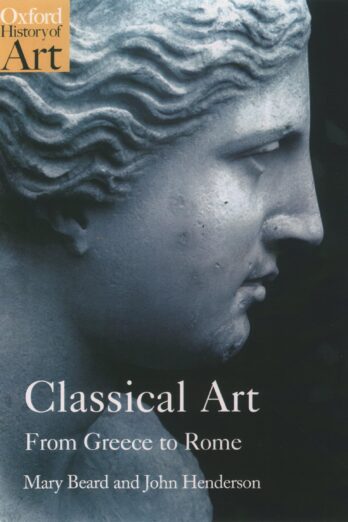
Classical Art: From Greece to Rome with John Genderson (2001)
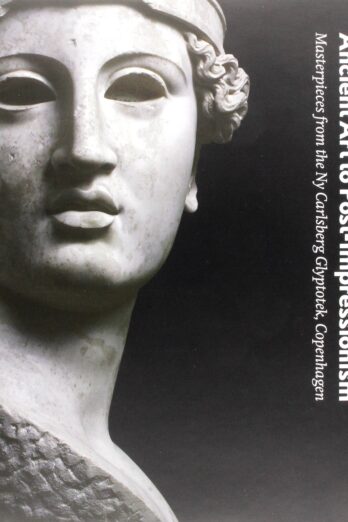
Ancient Art to Post Impressionism: Masterpieces from the Ny Carlsberg Glyptotek Copenhagen with Norman Rosental, Maryanne Stevens, Fleming Friborg, Ann Dumas (2004)
The Roman Triumph (2007)
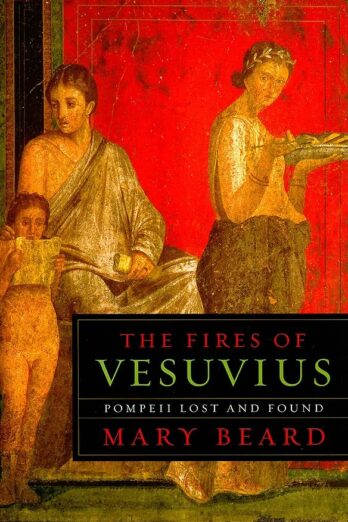
The Fires of Vesuvius: Pompeii Lost and Found (2008)
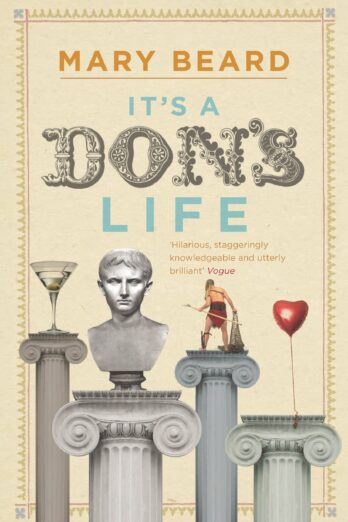
It’s a Don’s Life (2009)
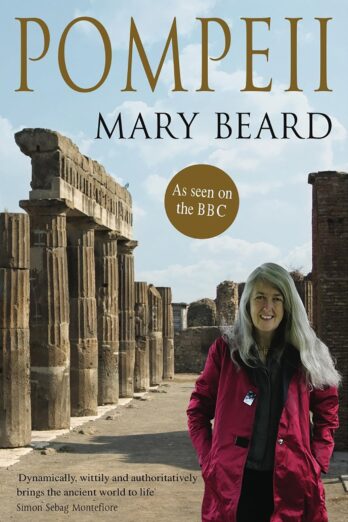
Pompeii: The Life of a Roman Town (2010)
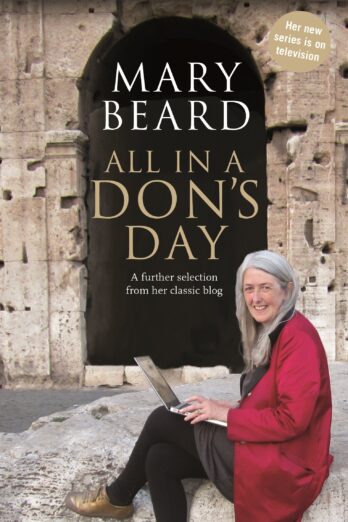
All in a Don’s Day (2012)
AA Agendas 12: Drawings that Count with Noam Andrews (2013)
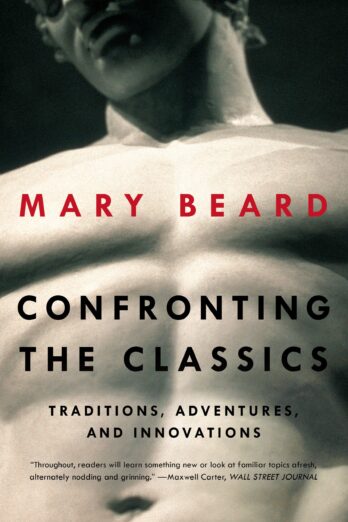
Confronting the Classics: Traditions, Adventures and Innovations (2013)
SPQR: A History of Ancient Rome (2015)
Women & Power: A Manifesto (2017)
Civilisations: The Eye of Faith (2018)
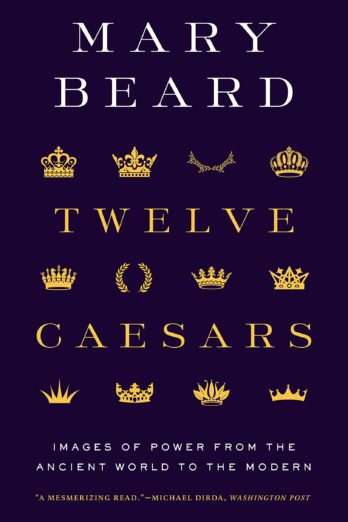
Emperor (2019)
The Rise of American Civilization (2023)
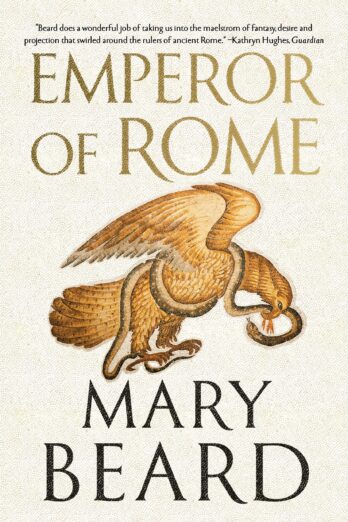
Emperor of Rome (2023)
Talking Classics (2026)
Beard uses various platforms, including books, documentaries, and blogs, to engage the public with ancient history.